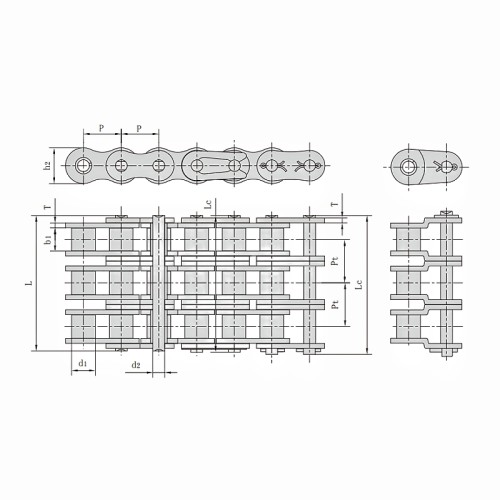
ANSI #50SS-3 Stainless Steel Roller Chain | 5/8" Pitch Triplex Chain
- Model
- #50-3 Stainless Steel Roller Chain
Item specifics
- Material
- Stainless Steel
- Color
- Silver
- Accuracy
- High precision roller chain
- Quality
- Durable roller chain
- Interchangeability
- Directly interchangeable with other brands
Review
Description
About ANSI #50-3 Stainless Steel Roller Chains
CTS® #50SS-3 Stainless Steel Roller Chain
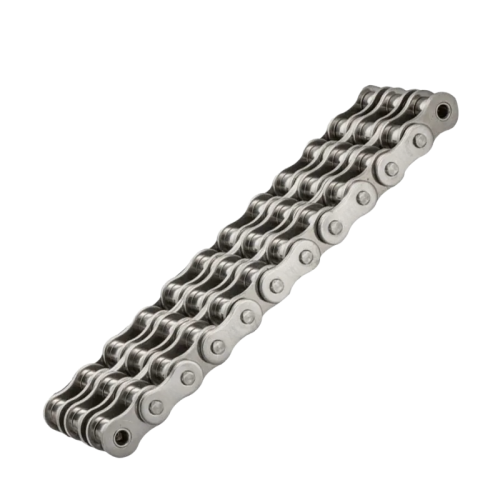
The ANSI #50SS-3 is a 5/8-inch pitch triplex (three-strand) roller chain made from austenitic stainless steel. It carries a 45.6 kN minimum tensile strength across three strands on shared pins with an 18.11 mm transverse pitch — three times the capacity of #50SS (15.2 kN) and 1.5 times #50SS-2 (30.4 kN). 304 stainless steel is standard; 316 stainless is available on request for salt spray, chloride-rich processes, or aggressive chemical contact. Manufactured to ANSI B29.1 and interchangeable with any #50-3 sprocket built to that standard.
For a quotation or other information on stainless steel roller chain, please contact us, and we will be happy to help you.
Quality Assurance:
ISO9001: 2015 and GB/T24001-2016 / ISO14001: 2015.
ANSI #50-3 Stainless Steel Roller Chain Technical Data
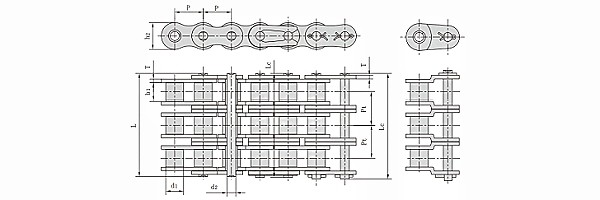
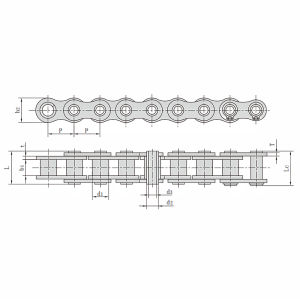
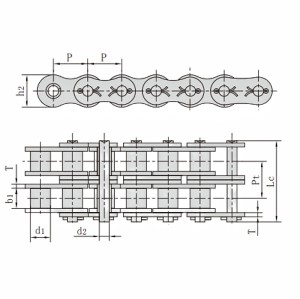
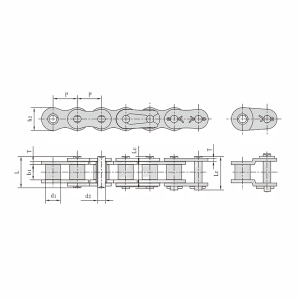
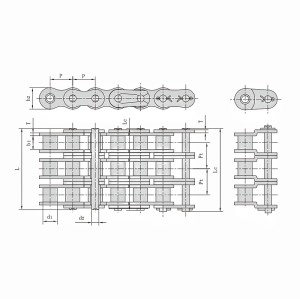
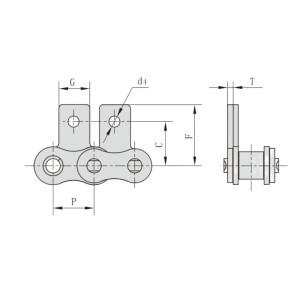
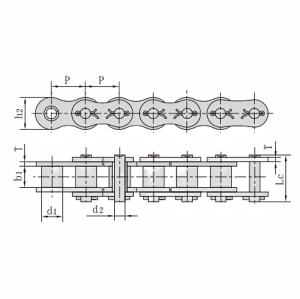
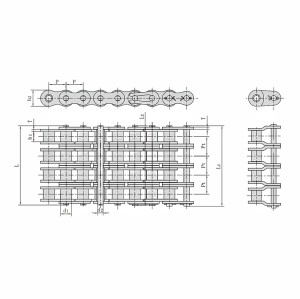
#50SS-3 Stainless Steel Roller Chain Dimensions
- Pitch(P): 15.875 mm
- Roller diameter(d1): 10.16 mm
- Width between inner plates(b1): 9.40 mm
- Pin diameter(d2): 5.08 mm
- Pin length(L): 57.0 mm
- Pin length(Lc): 58.5 mm
- Inner plate depth(h2): 15.09 mm
- Plate thickness(T): 2.03 mm
- Transverse pitch(Pt): 18.11 mm
- Tensile strength: 45.6/1025 kN/lbf
- Weight per meter: 3.24 kg/m