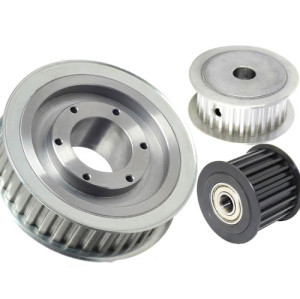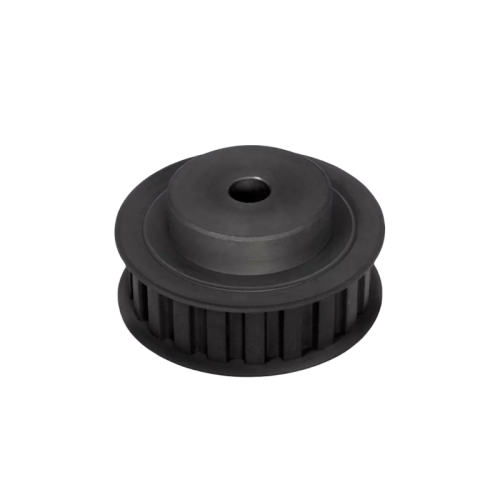
30 L 050 Timing Belt Pulley | L Pitch, 1/2" Wide | CTS
- Model
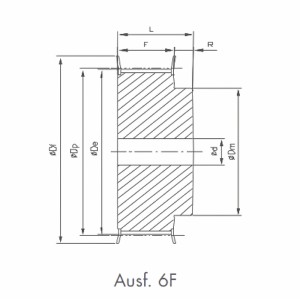
- 30 L 050 (Type 6F)
Item specifics
- Material
- Carbon Steel
- Color
- Natural
- Surface Treatment
- Anodizing/Hardening/Plating/Powder Coating/Passiva
- Accuracy
- High precision timing belt pulley
- Quality
- Durable timing belt pulley
- Interchangeability
- Directly interchangeable with other brands
Review
Description
About 30 L 050 Timing Belt Pulleys
CTS® 30 L 050 Timing Belt Pulley
A 30 L 050 pulley is the larger half of the common L-pitch pair: same 3/8 inch trapezoidal tooth profile and the same 1/2 inch belt width as the 14 L 050, with more than twice the teeth. That changes how the drive behaves far more than the part number suggests — more teeth in mesh, less chordal action, lower belt bending stress, and a quieter drive at speed.
For a quotation or other information on the L timing belt pulley, please contact us, and we will be happy to help you.
Quality Assurance:
ISO9001: 2015 and GB/T24001-2016 / ISO14001: 2015.
30 L 050 Timing Belt Pulleys Technical Data
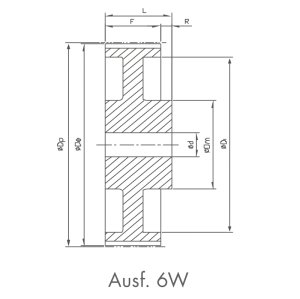
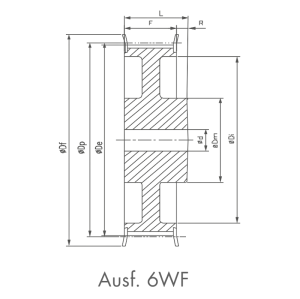
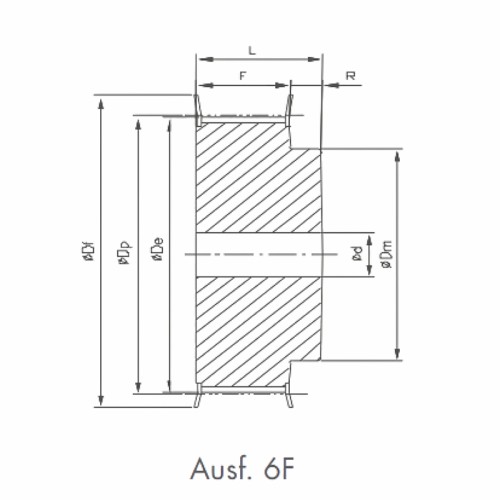
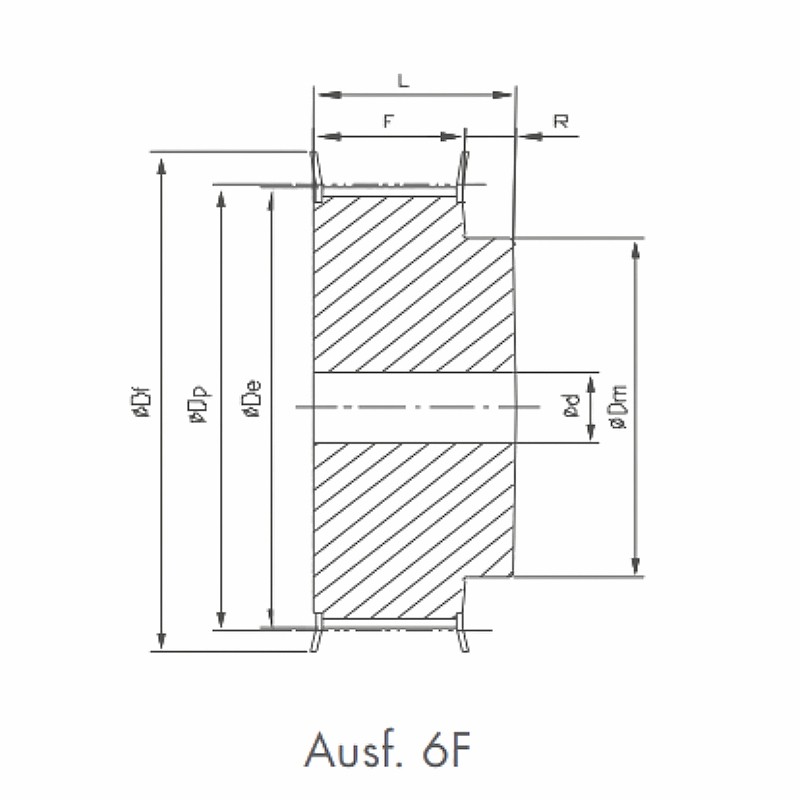
30 L 050 Timing Belt Pulley Dimensions
- Number of teeth: 30
- Type: 6F
- Material: ST
- Belt width: 12.7 mm
- Dp: 90.96 mm
- De: 90.20 mm
- Df: 97 mm
- F: 19 mm
- L: 32 mm
- Dm: 70 mm
- Pilot bore d: 11 mm
- Finished bore hole d-max: 30 mm
- Weight (Approx.): 1.100 kg
Reading the Part Number
- 30 — number of teeth.
- L — imperial trapezoidal profile, 3/8 inch pitch. Capacity sits between XL and H.
- 050 — belt width code, 1/2 inch.
The pitch and width are shared with the 14 L 050; only the tooth count changes. That makes the two pulleys interchangeable in terms of belt series, which is why they are so often used together as a ratio pair.
Timing Pulley Bore, Flange, and Balance
Bore Types
- Pilot bore lets you machine to your shaft and control runout;
- Finished bore with keyway and set screws installs directly;
- Taper bush covers several shafts with one pulley body.
Never exceed the maximum bore listed for the pulley — the hub carries the torque.
Flange
Flanging: the usual rule is that at least one pulley in the drive is flanged on both sides, normally the smaller one. Flange both pulleys when the centre distance is eight times the smaller pulley's diameter or more. Large pulleys are commonly supplied unflanged; on vertical shafts, flange at least the bottom side.
Balance
At higher speeds, check the balance. A 30-tooth pulley is heavier than a 14-tooth one, and an unbalanced pulley shows up as vibration that no amount of belt tension will fix.